
Your water bill just jumped, but nothing seems obviously wrong. Here’s how to find hidden water leaks before it gets worse.
Quick fact: The average household’s leaks waste nearly 10,000 gallons of water per year, enough to fill a backyard swimming pool. Most of those leaks are completely silent and out of sight.
You open your water bill and do a double-take. It’s noticeably higher than last month, but you haven’t been watering the lawn more or filling a pool. Nothing seems off. The toilet flushes fine. The faucets aren’t dripping. So where is the water going?
Hidden water leaks are one of the most frustrating and costly problems a homeowner can face. They’re easy to miss, but they’re incredibly common. The good news? You don’t need to be a plumber to find them. With a few simple checks, you can often pinpoint the problem yourself and know exactly when it’s time to call in a professional.
Why a High Water Bill Deserves Immediate Attention
Most people assume a spike in their water bill is a billing error. Sometimes it is. But in many cases, it means there is a hidden water leak letting water escape somewhere in your home, silently and consistently, 24 hours a day.
Hidden leaks don’t just cost you money. Left unchecked, they cause structural damage, encourage mold growth inside walls and under floors, and can eventually require major repairs that far exceed the original plumbing fix. A slow leak behind a wall may show no visible signs for months before it becomes a serious problem.
The earlier you catch it, the less damage and expense you’ll deal with.
How to Check for Hidden Water Leaks in Your Home
Start With Your Water Meter
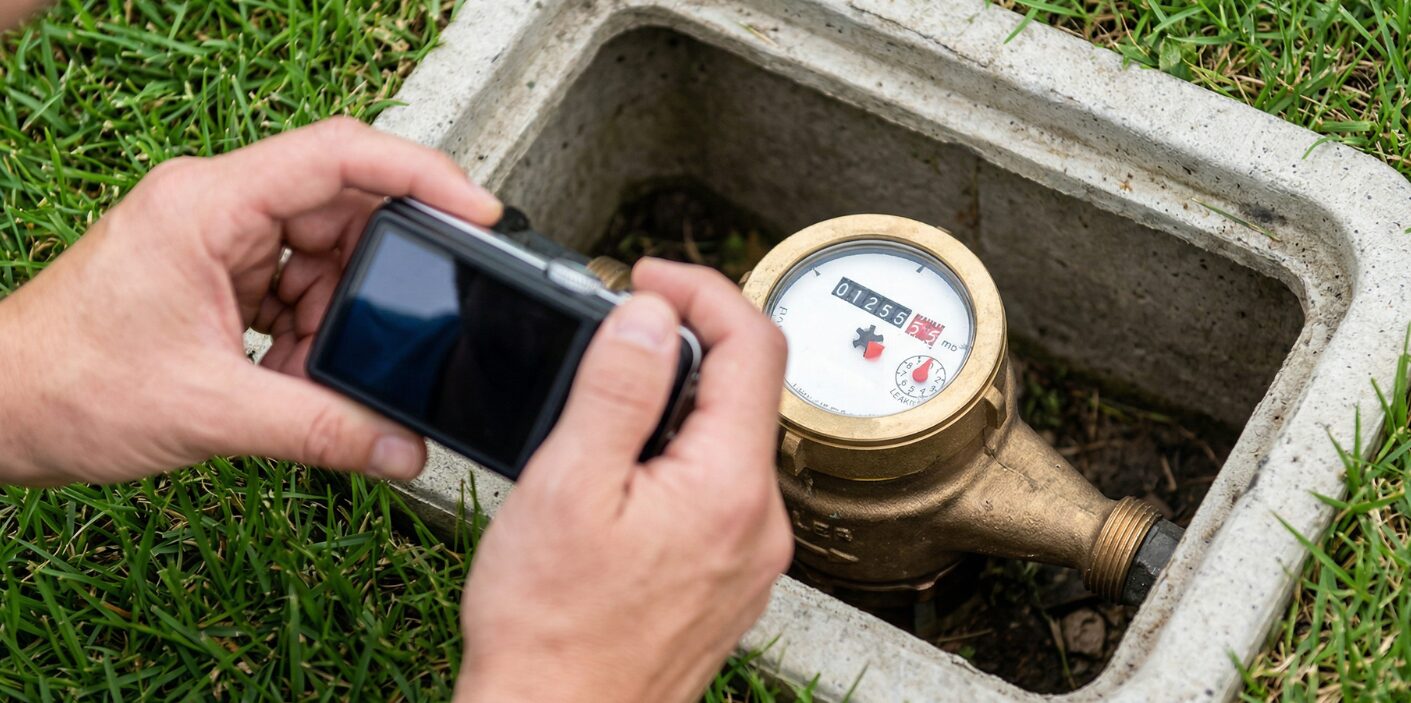
Your water meter is the single most reliable tool for detecting a leak you can’t see. Here’s how to use it.
Turn off every faucet, appliance, and irrigation system in your home. Nothing should be running. Then locate your water meter, which is usually near the street or along the side of your home, and write down the current reading or take a photo. Wait one to two hours without using any water, then check the meter again. If the number changed at all, water is moving through your system. That’s a leak.
Many modern meters have a small triangular leak indicator that spins even when nothing is on. If you see it rotating while all water is shut off, that’s your confirmation right there.
Check Your Toilets First
Toilets are responsible for the majority of hidden household leaks, and most of them are completely silent. A faulty flapper, which is the rubber seal inside the tank, can leak hundreds of gallons every day without making any noise or visible drip.
The test is simple. Add a few drops of food coloring to the toilet tank and wait 15 minutes without flushing. If color shows up in the bowl, your flapper is leaking. Replacing a flapper is a straightforward, inexpensive fix that most homeowners can handle themselves. It takes about 10 minutes and costs under $10 at any hardware store.

Check Under Sinks and Around Appliances
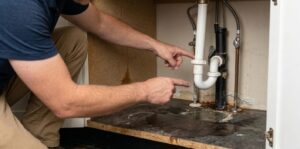
Get down and look under every sink in your home, including kitchen, bathrooms, and the laundry room. You’re looking for water stains, rust, mineral deposits, soft cabinet flooring, or any trace of moisture. These are early signs of a slow drip behind or under a fixture.
Do the same around your washing machine, dishwasher, refrigerator water line, and water heater. Check the floor around each appliance for soft spots, discoloration, or a musty smell. Any of those signals mean water has been sitting somewhere it shouldn’t.
Look for Signs Inside Walls and Ceilings
Your walls can tell you a lot even when you can’t see what’s behind them. Bubbling, peeling, or warped paint or wallpaper is a red flag. So are brown or yellow water stains on ceilings, a musty smell in a room with no obvious source, or drywall that feels soft or spongy when you press on it.
Any of these signs, particularly when combined with a high water bill, point to a pipe leaking inside the wall. That’s when you stop investigating on your own and call a licensed plumber.
What Homeowners Get Wrong About Water Leaks
The most common mistake is assuming that if you can’t see or hear a leak, there isn’t one. Hidden water leaks are the most damaging kind, precisely because they go unnoticed for so long. I’ve seen homeowners discover serious mold behind drywall after months of what they assumed was just a “slightly odd” water bill.
Another assumption worth addressing: “My bill is high because it’s summer.” Irrigation use does increase warm-weather bills, but a sudden and unexplained spike is worth investigating before you chalk it up to habit. Waiting for the next billing cycle to confirm it means hundreds more gallons lost in the meantime.
Worth knowing: A single toilet leak can waste up to 200 gallons of water per day. A leaking outdoor faucet or hose bib can waste even more. These aren’t rare edge cases. They’re among the most common plumbing issues in residential homes.
When to Call a Professional Plumber
DIY checks are a solid starting point, but some leaks are outside what a homeowner can safely locate or fix on their own.
Call a professional plumber if your meter confirms water is moving even with everything shut off but you can’t find the source. The same goes if you see signs of water damage inside walls or ceilings, if your water pressure has dropped noticeably, if you hear running water inside your walls or floors, or if your water bill stays consistently high despite no visible leak.
A professional plumber uses pressure testing and leak detection equipment to locate exactly where the problem is, without tearing open your walls unnecessarily. Acting fast keeps the repair manageable. Waiting turns it into a renovation.
Think You Might Have a Hidden Water Leak?
Our team is available 24/7 for emergency plumbing services, and we offer free quotes so you know what to expect before any work begins.
Call Now or Get an Appointment today.